Five Elements Personality Test: The Wu Xing Types
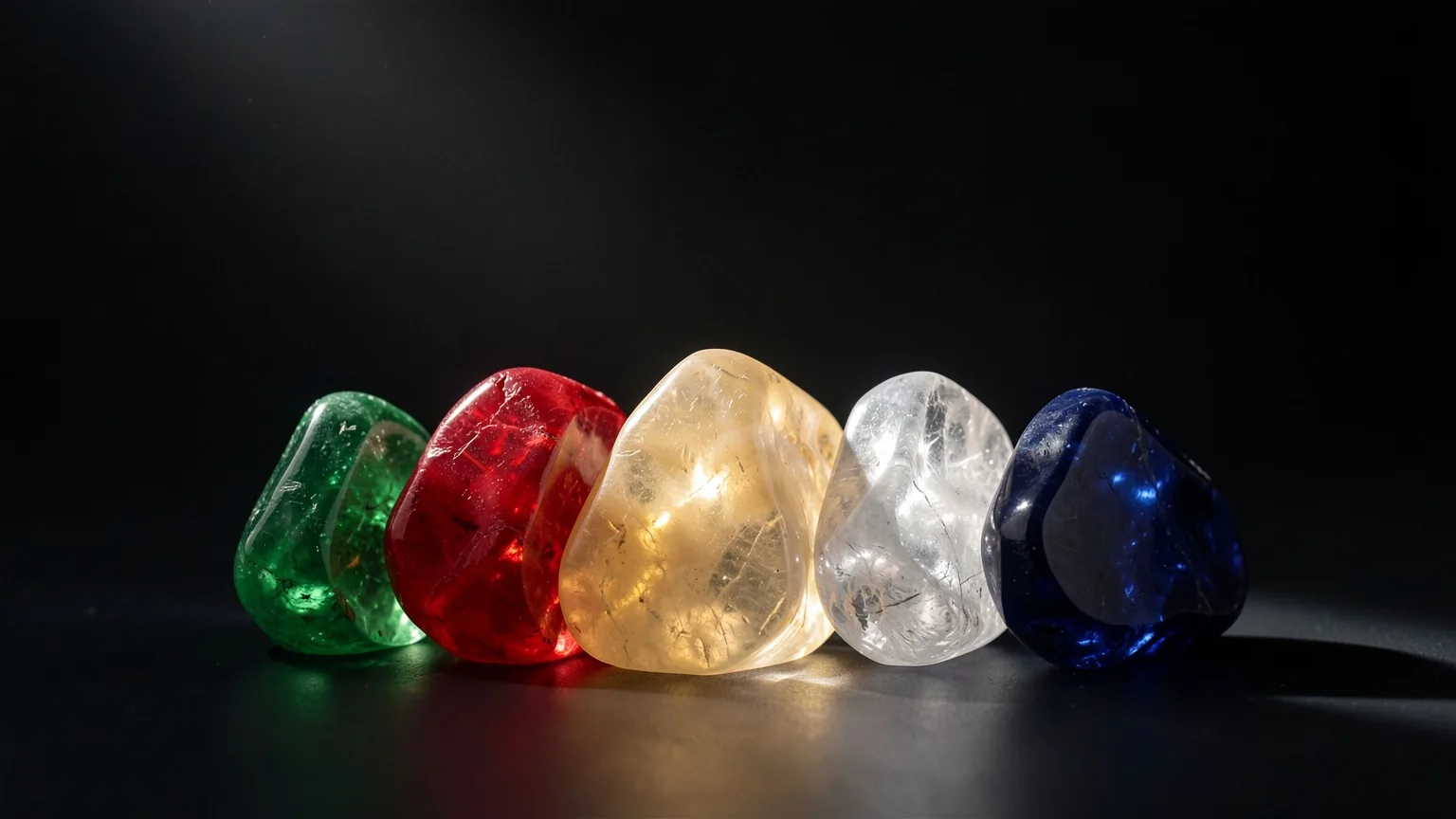
A five elements personality test is the friendliest door into Chinese metaphysics. It takes the Wu Xing — the five elements of wood, fire, earth, metal and water — and turns them into five temperaments you can recognize in yourself in a few minutes, without learning a single Chinese character.
This guide explains what such a test actually measures, describes the five temperaments, shows how the same five elements are derived from a bazi chart, and warns where a quick quiz and a real chart can disagree. Everything here is offered as a tool for self-reflection, not as a scientific diagnosis or a fixed verdict.
What a Five Elements Personality Test Actually Measures
A five elements personality test measures temperament in the language of the Wu Xing, the five phases of traditional Chinese thought. The idea is simple: each element carries a cluster of tendencies, and the element that dominates your answers is read as the dominant note in your personality.
Wood is associated with growth, initiative and planning. Fire is associated with expression, energy and warmth. Earth is associated with stability, support and groundedness. Metal is associated with structure, principle and precision. Water is associated with adaptability, perception and depth.
The test itself is usually a set of questions about how you react, what you value and where you feel most at home. There is no single authoritative version, and the results should be read the way you would read any reflective prompt: as a starting point for noticing yourself, not as a label that confines you.
The key distinction is between a type and a tendency. A five elements personality test describes tendencies, and tendencies are true on average, not in every moment. You may be a fire in a group and an earth at home, or a wood when starting a project and a water when it gets complicated. The elements are a vocabulary, not a cage.
Wood, Fire, Earth, Metal and Water: The Five Temperaments
Each element has a recognizable character, and the best way to use a five elements personality test is to see which description you nod along with most.
Wood is the element of spring and of beginnings. Wood types are read as growth-minded: they like to start things, to reach upward, to plan and to push through obstacles. Their edge is a tendency to stretch too many ways at once.
Fire is the element of summer and of visibility. Fire types are read as expressive and energetic: warm, enthusiastic, quick to laugh and quick to act. Their edge is a tendency to burn bright and then need to recharge.
Earth is the element of late summer and of holding. Earth types are read as steady and supportive: reliable, patient, good at bringing people together and keeping things stable. Their edge is a tendency to absorb too much and to resist change.
Metal is the element of autumn and of refinement. Metal types are read as principled and precise: they value standards, fairness and clarity, and they cut through confusion. Their edge is a tendency to be sharper than a situation needs.
Water is the element of winter and of depth. Water types are read as perceptive and adaptive: observant, reflective and able to find a way around almost anything. Their edge is a tendency to keep their own counsel too long.
Most people recognize themselves in two or three elements, and that is exactly how the Wu Xing tradition works: you are a balance, not a single element.
How the Wu Xing Balance Comes from a Bazi Chart
A five elements personality test is a shortcut, but the Wu Xing system has a source it is approximating: the five-element balance of a bazi chart.
A bazi chart is built from eight characters, and each character carries an element. The chart's element balance is the count of how often each of the five elements appears across those eight characters, plus the influence of the seasons. The element that is strongest in this count — and especially the element of the day master, the stem that represents you — is read as the dominant temperament.
This is where the five elements of a bazi chart meet the personality test: the test asks questions to guess what a chart computes directly. The chart does not ask how you feel; it reads the structure of your birth time and lets the element balance emerge from it.
For anyone serious about the five elements, the chart is the deeper tool. The test is fun and fast; the chart is specific to you and reproducible. They answer the same question — which element leads your temperament — through two different routes.
Free Test Versus Your Chart: Why the Two Can Disagree
It is common for a five elements personality test to give one element and a bazi chart to show another, and the disagreement is usually informative rather than a sign that either is broken.
A quiz measures your self-image in the moment of answering. If you have spent years in a job that rewards precision, you may answer like a metal even if your chart is water, because you have learned to emphasize that side of yourself. A chart, by contrast, reads the structure beneath the self-image — the temperament you were born into, not the one your environment has trained.
The tradition's answer is that both can be true at once. Your chart describes your native balance, and your life shapes how much of each element you actually express. A mismatch between a test and a chart is often the most useful result of all, because it points at where you have adapted to circumstances that may or may not still fit.
This is also why a free quiz should never be taken as a final word. It is a mirror held up for a moment; the chart is a map of the whole terrain.
Element Strength and the Day Master: A Worked Example
To see how the five elements become a personality reading, consider a chart with a fire day master.
The day master is the anchor, so the person is first read as a fire: expressive, warm and energetic. Then the rest of the chart is weighed. If the chart is heavy in wood — the element that feeds fire — the fire is strong and well supported, and the fire temperament is read as the dominant, confident note. If the chart is heavy in water — the element that douses fire — the fire is weak, and the person may read more like someone whose natural fire is kept low, expressing itself in flashes rather than steadily.
The ten gods then add detail. For a fire day master, wood characters are resources, earth characters are output, water characters are authority, and metal characters are wealth. A bazi chart's ten gods describe how that fire actually moves through life — where it creates, where it is pressured, and where it finds support.
The worked example shows why a five elements personality test is only the first word. The day master gives the element, the balance gives the strength, and the ten gods give the shape. All three layers come from the same eight characters, and the free bazi calculator shows them all at once.
Turning the Result into Questions, Not Verdicts
The best use of a five elements personality test is not to accept a label but to turn the result into questions you can actually use.
If you test as wood, ask where in your life you are starting too much and finishing too little. If you test as fire, ask whether your energy is being seen or wasted. If you test as earth, ask whether you are holding more than is yours to hold. If you test as metal, ask whether your standards are serving you or isolating you. If you test as water, ask whether you are adapting so well that you have stopped choosing.
These are the questions the Wu Xing tradition actually cares about, and they are far more valuable than a single element stamped on a result screen. The elements are a language for noticing; the point is the noticing, not the noun.
The same habit applies to a bazi chart. Read your day master and your element balance as tendencies, then test them against your own experience. Where they fit, you have a useful mirror. Where they do not, you have a useful question. That is the whole, honest purpose of the five elements — a vocabulary for self-understanding, offered as a prompt rather than a prophecy.
Ready to see which element leads your own chart? Open the free bazi calculator and generate your four pillars, then look at the element counts and the day master. It is the five elements personality test in its original form — computed from your birth time rather than guessed from a questionnaire.